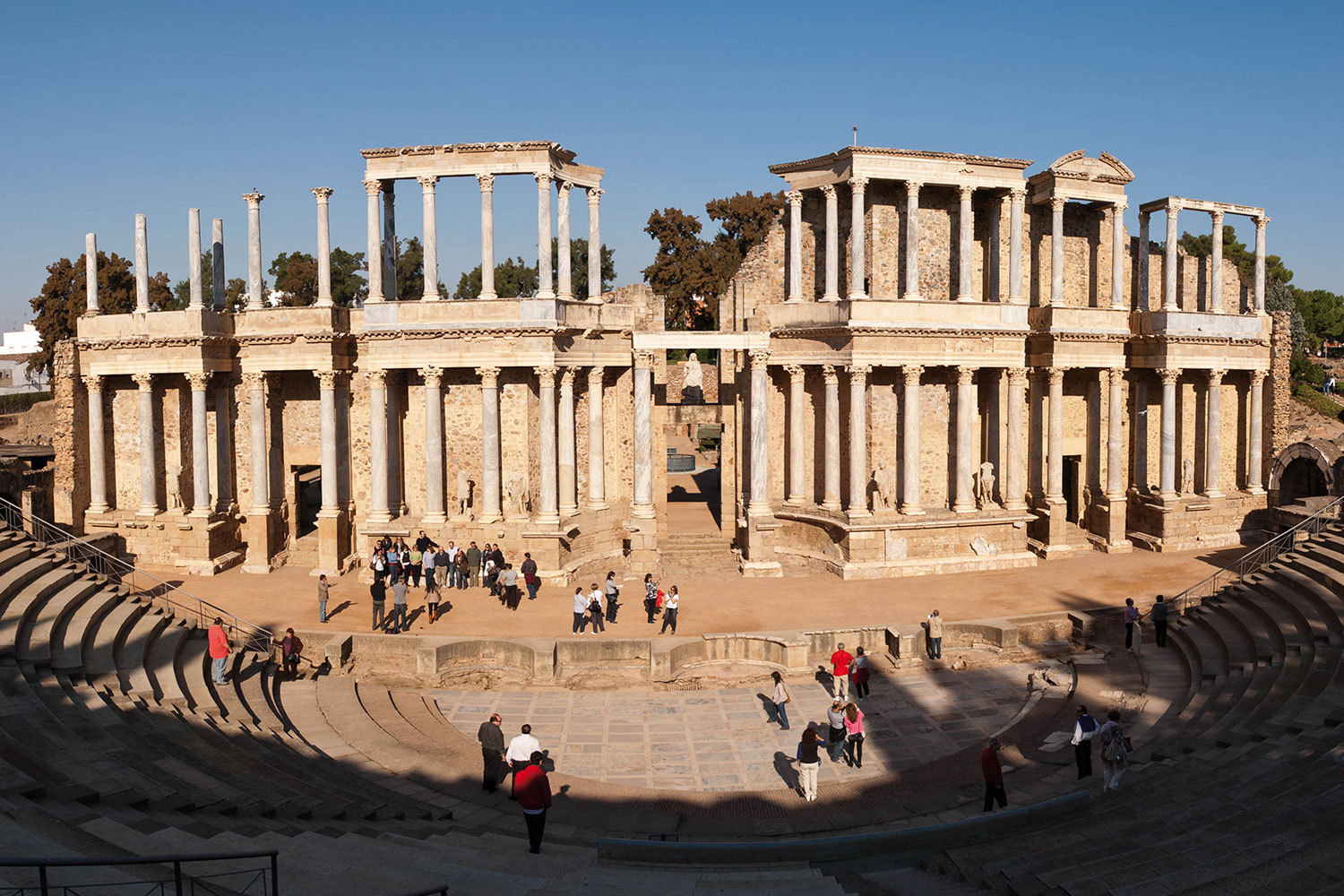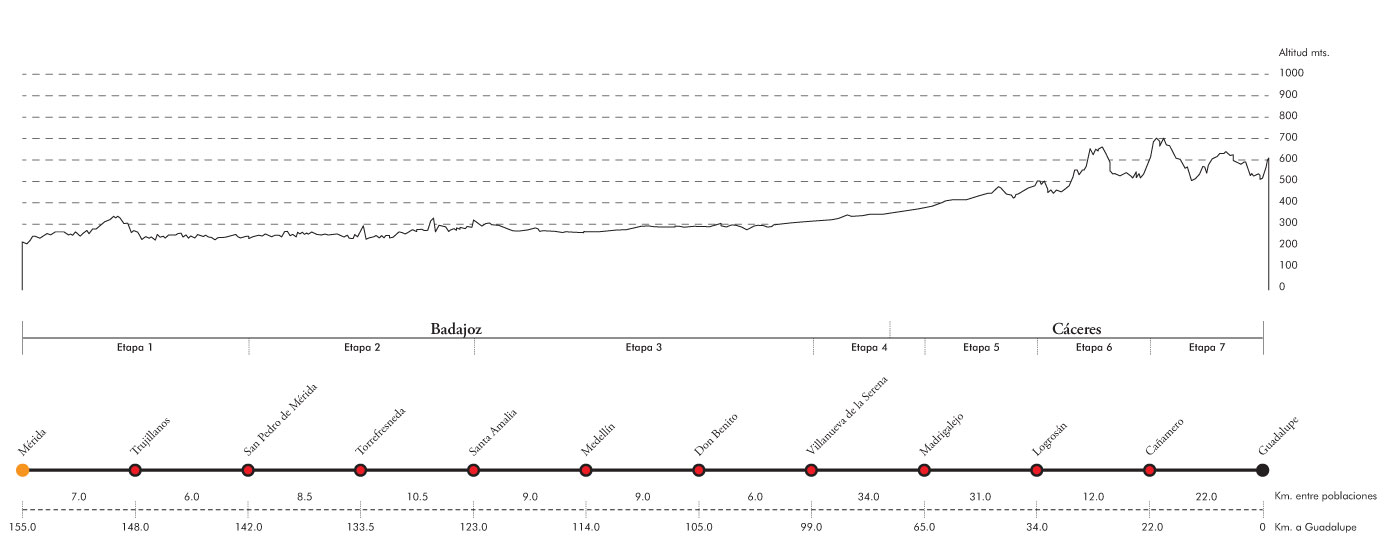


This way is heir to the ancient Roman road that linked Mérida with Toletum (Toledo), which flourished at the time. The origins of this route are lost in the mists of time, as this Roman road was probably built over an old Tartessian track designed to obtain tin and gold from Lusitania.
From the Islamic invasion onwards these roads were used for the commercial traffic of merchants, muleteers, livestock and horses, and for military raids by both sides. At the end of the Late Middle Ages, Guadalupe became a crossroads on our way, adding to its usual traffic the increasingly established passage of pilgrims and serving as a link with the ways that came from the north, from the Peña de Francia or from Ávila over the Puerto del Pico pass.
Above all in the 15th and 16th centuries, in the early modern period, the old road regained a splendour probably greater than it had under the Roman Empire, as Guadalupe became the largest pilgrimage centre in the Peninsula.
A wealth of historical documents still survives showing that this road was travelled by kings such as Alfonso VII of Castile, returning from Córdoba in 1133; the Leonese prince Sancho Fernández, on his way from Toledo to Seville in 1218, who, staying with his troops at the castle of Cañamero, was killed fighting a bear; Henry IV, marching to war in Andalusia in the mid-15th century; Ferdinand V of Aragon and Isabella of Castile; King Sebastian I of Portugal (nephew of Philip II); and other illustrious figures such as Christopher Columbus, Hernán Cortés, Miguel de Cervantes, coming from Seville in 1581, and Íñigo López de Mendoza.
Thanks to the monastery’s properties along the way, we know of the flow of pilgrims who used this road, which was also fed by travellers from the south, such as those from Seville along the Vía de la Plata, and from the east, from towns near Badajoz or from Portugal.
Without doubt, the greatest promoters and protagonists of this way, as of so many others linked to Guadalupe, were Isabella I of Castile and Ferdinand V of Aragon. Although the Catholic Monarchs did not travel the way as pilgrims, they showed a special interest in the shrine of Guadalupe, visiting it on more than sixteen occasions. Ferdinand of Aragon began and ended his reign linked to the Royal Monastery of Guadalupe. As he was leaving the monastery on the way to Trujillo, he was told he was king because his father John II had died (January 1470); and on his way to Guadalupe, where he was to preside over the chapter of the Order of Calatrava, he died on 23 January 1516 in Madrigalejo, in the house that the Hieronymites of Guadalupe owned in that town in Cáceres.