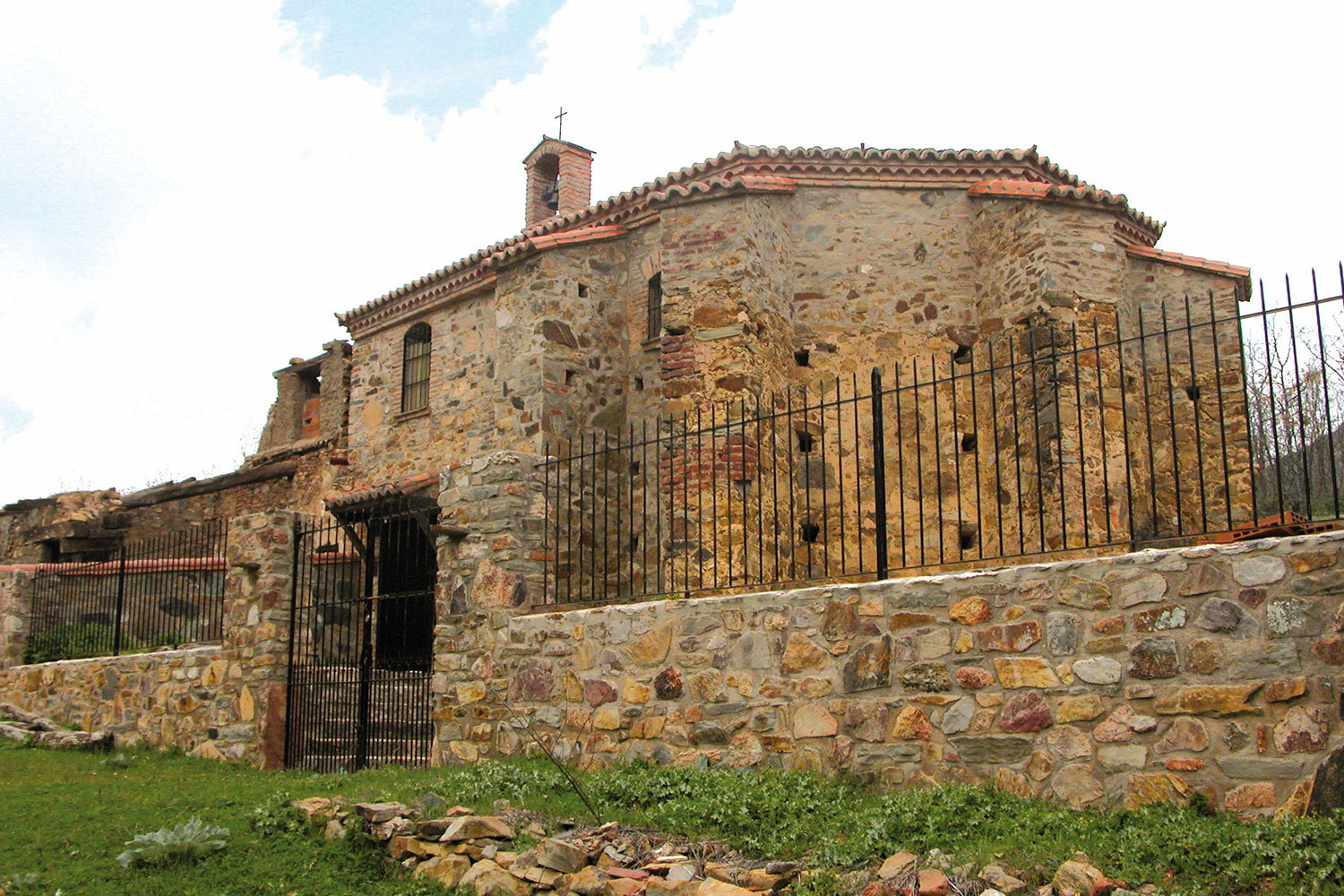


‘My life has been a long journey’, Charles, I of Spain and V of Germany, is said to have exclaimed on arriving at the Monastery of Yuste at the end of the harsh winter of 1557. After a long journey of several months from his possessions in Flanders, and having left his kingdom in the hands of his son Philip II, the emperor entered through the church of the small monastery of Yuste, where he was received by the small community of Hieronymite monks who lived there. Seated in a chair, he had his hands kissed by each of the monks, while the prior addressed him with words of thanks for choosing to live among them. Thus began the end of one of the leading figures in European history and of our Hieronymite way, for his journey and active life were coming to a close.
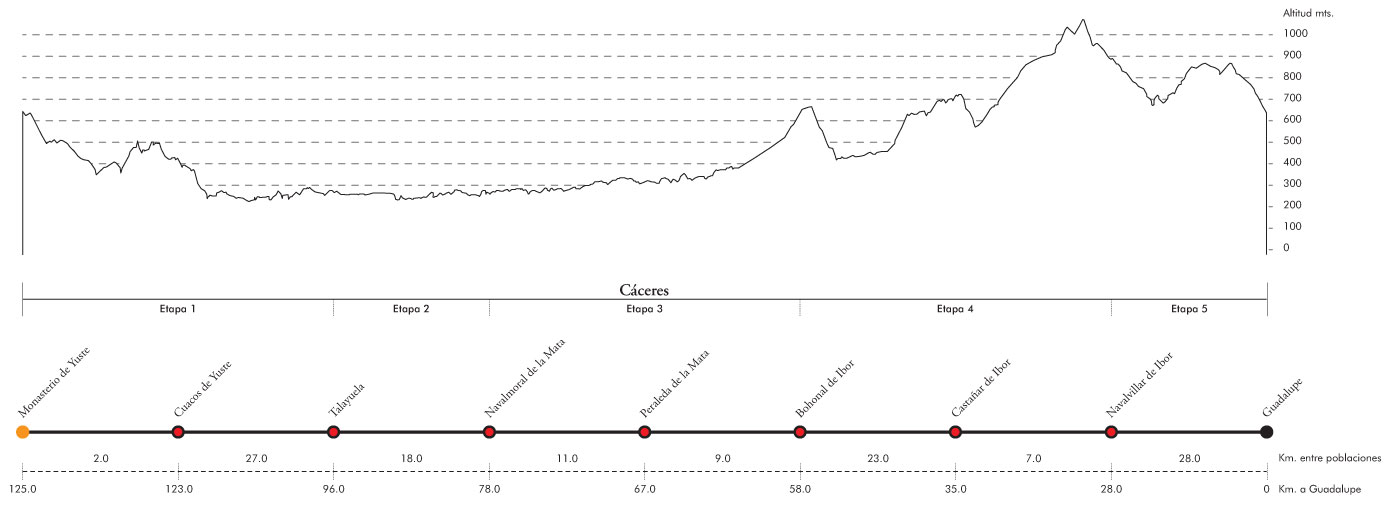
A route between two of the most important monasteries of the Hieronymite Order, taking shape as a historical and cultural corridor linking the monastery of Yuste with that of Guadalupe which, as we know, was the main intellectual, cultural and religious centre of the 15th and 16th centuries.
The Hieronymite Order, established in the 14th century, was paradoxically not founded by Saint Jerome. The true founders of the order were Pedro Fernández Pecha and Fernando Yáñez de Figueroa who, before becoming monks, had been noblemen in the chamber of Alfonso XI (1311- 1350) and his son Peter I the Cruel (1334-1369). Many members of the nobility came to feel sympathy, admiration and respect for this new religious family established at San Bartolomé de Lupiana (in the lands of present-day Ciudad Real) and for its project of spiritual renewal. Its founders promoted an eremitic movement of contemplative life that emerged as a reaction to monastic decline and was completely independent of traditional monasticism.
In 1389, John I of Castile decided to hand over the old church of Guadalupe, over which he held royal patronage, to the Hieronymites, as one more link in the Castilian monarch’s ambitious policy of religious reform. The change from church to monastery, from secular to regular clergy, ended a period in which Guadalupe went from being a simple hermitage to becoming one of the most important Marian centres in Castile.
From the 15th century onwards, the Hieronymites devoted themselves wholeheartedly to the monarchs, who used and relied on the order as their own. The Catholic Monarchs, Philip I and later Charles V and Philip II all strengthened and reaffirmed the importance and weight of the order in the Spanish church.