

The origin of the way is hard to pin down, sometimes because of the legendary nature of the accounts and sometimes because of the uncertainties of the chroniclers of the time. However, the story of the discovery of the Virgin quickly spread and was accepted by late medieval society. In contrast to other pilgrimage routes in the 14th century, which declined because of the Black Death, the division of Christendom (Protestants regarded pilgrimages as vulgar popular practices) and the monarchs’ almost exclusive focus on conquering new worlds, the Way to Guadalupe emerged strongly in the peninsula, thanks to the unconditional support of the House of Habsburg and its promotion as a cultural and spiritual centre by the Hieronymite Order.
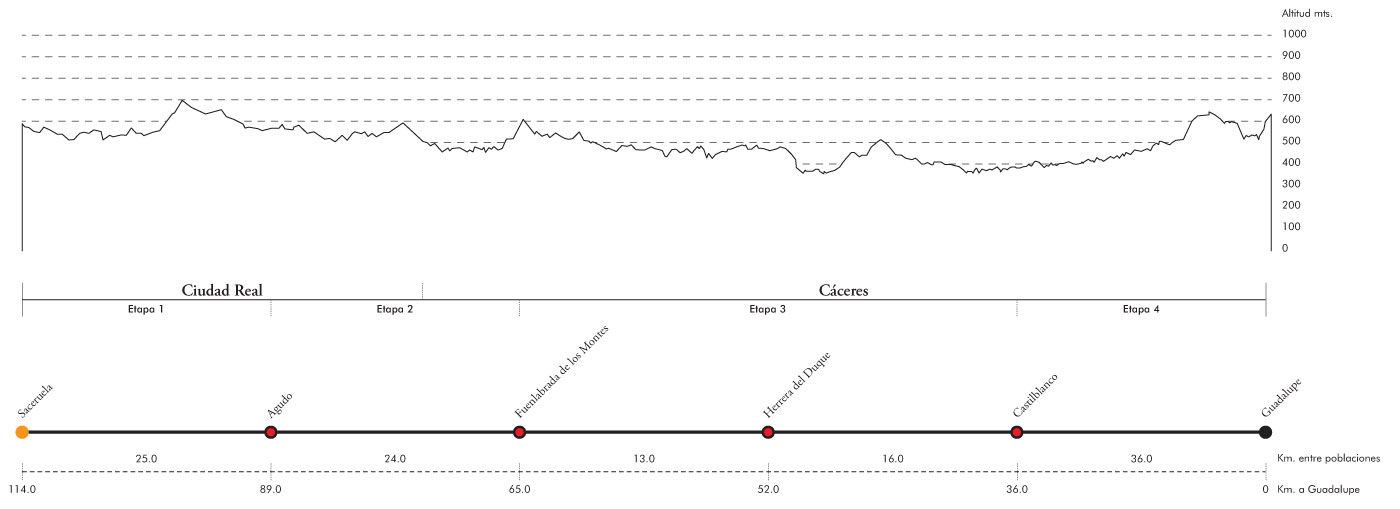
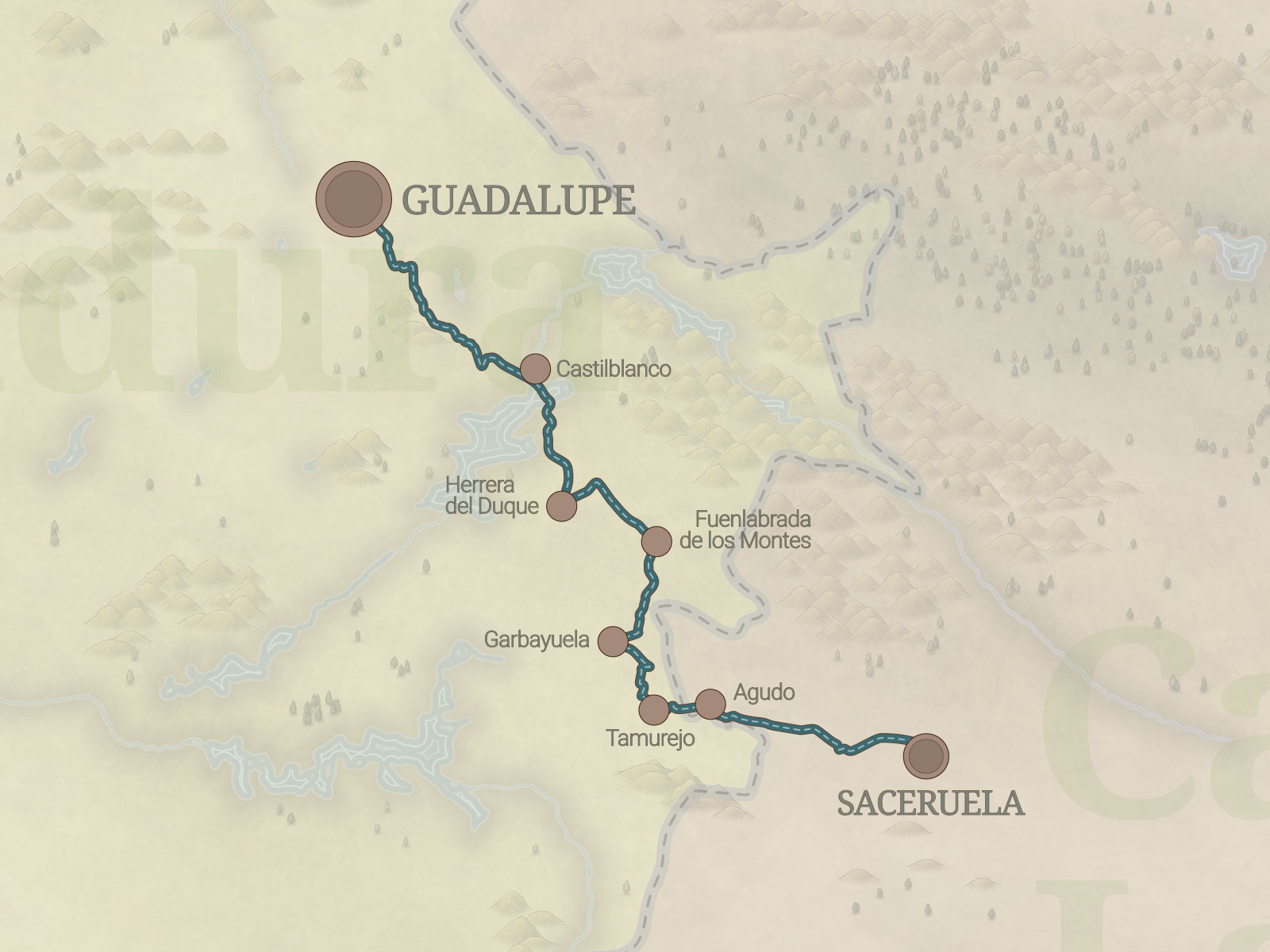
One of the main supporters and promoters of our Camino de Levante was the Castilian king Henry IV. It is not known whether he followed exactly the present route between Saceruela and Guadalupe, as medieval roads changed constantly with new paths and drove roads that made the journey easier, but we can say that he set out from Saceruela in 1463, accompanied by the Master of the Order of Calatrava, Pedro Girón Acuña, on his way to Guadalupe. We also know that, as he passed through, he granted Saceruela independence from Piedrabuena and new nearby lands to cultivate.
The way was finally consolidated in the 16th century by Don Alonso Rodríguez de Amargo, a priest of the Order of Calatrava, Chief Magistrate of Toledo in 1570 and an illustrious son of Saceruela. Among his great achievements was the merging of several confraternities, such as those of Santa Ana and the Veracruz, long established in Saceruela, into the new Order of Sacer, with the aim of maintaining the hospitals along the way to Guadalupe and assisting the pilgrims and people in need who travelled this route.
The Order of Sacer: pilgrims heading for the shrine generally had no safe roads, inns, hospitals or other services. This made the journey difficult for pilgrims, who had to cross completely deserted lands over several days of walking, without finding shelter along the way and therefore more easily falling victim to highwaymen on the one hand, and on the other to a lack of food that might befall them through improvisation or ignorance. For these reasons, and given the steady increase in pilgrims using this way, the Order of Sacer was founded, one of the first pilgrim institutions created outside the Hieronymite domain in Guadalupe and the main force behind the upkeep of hospitals and facilities created for the benefit of pilgrims.



 Language: Spanish