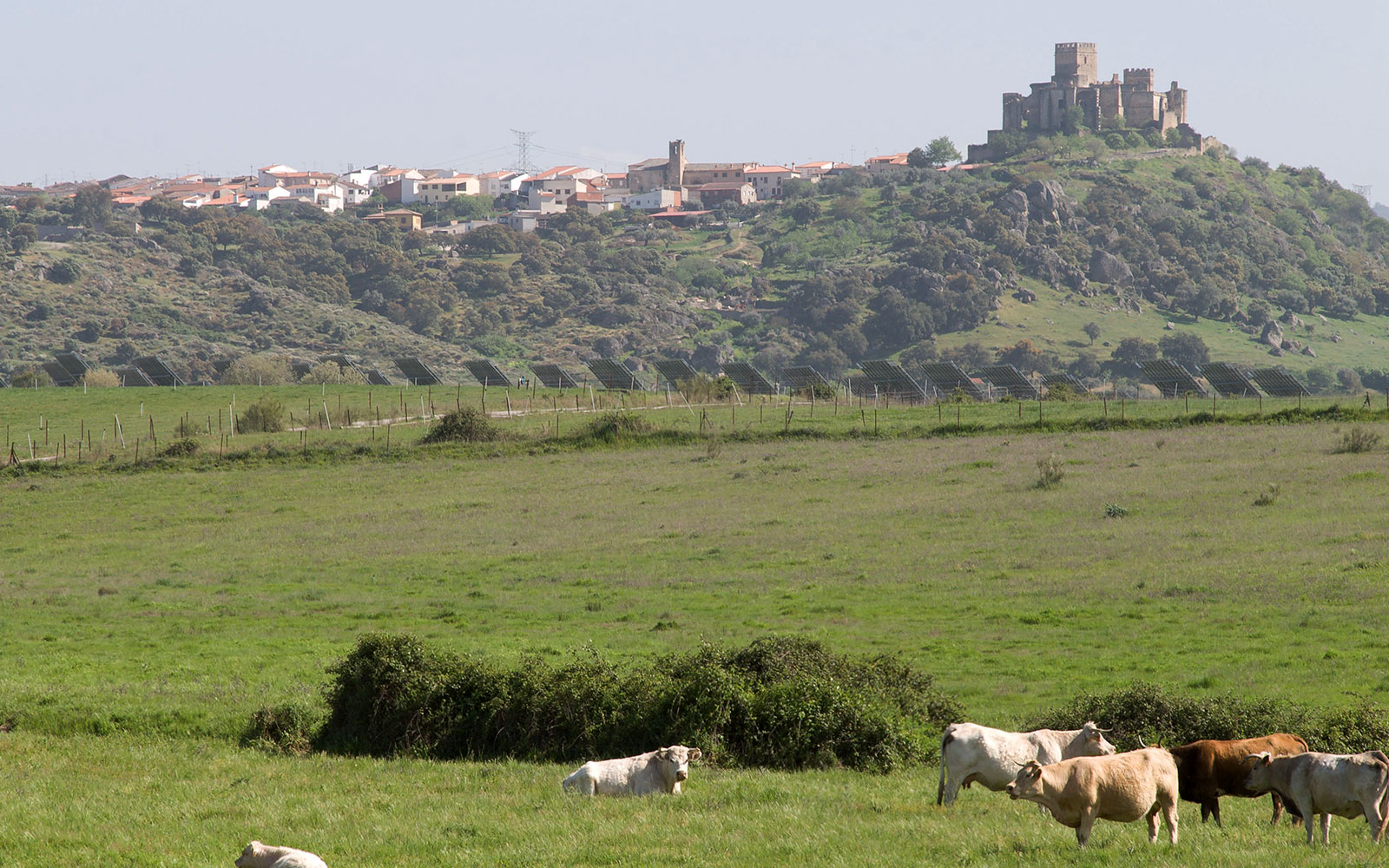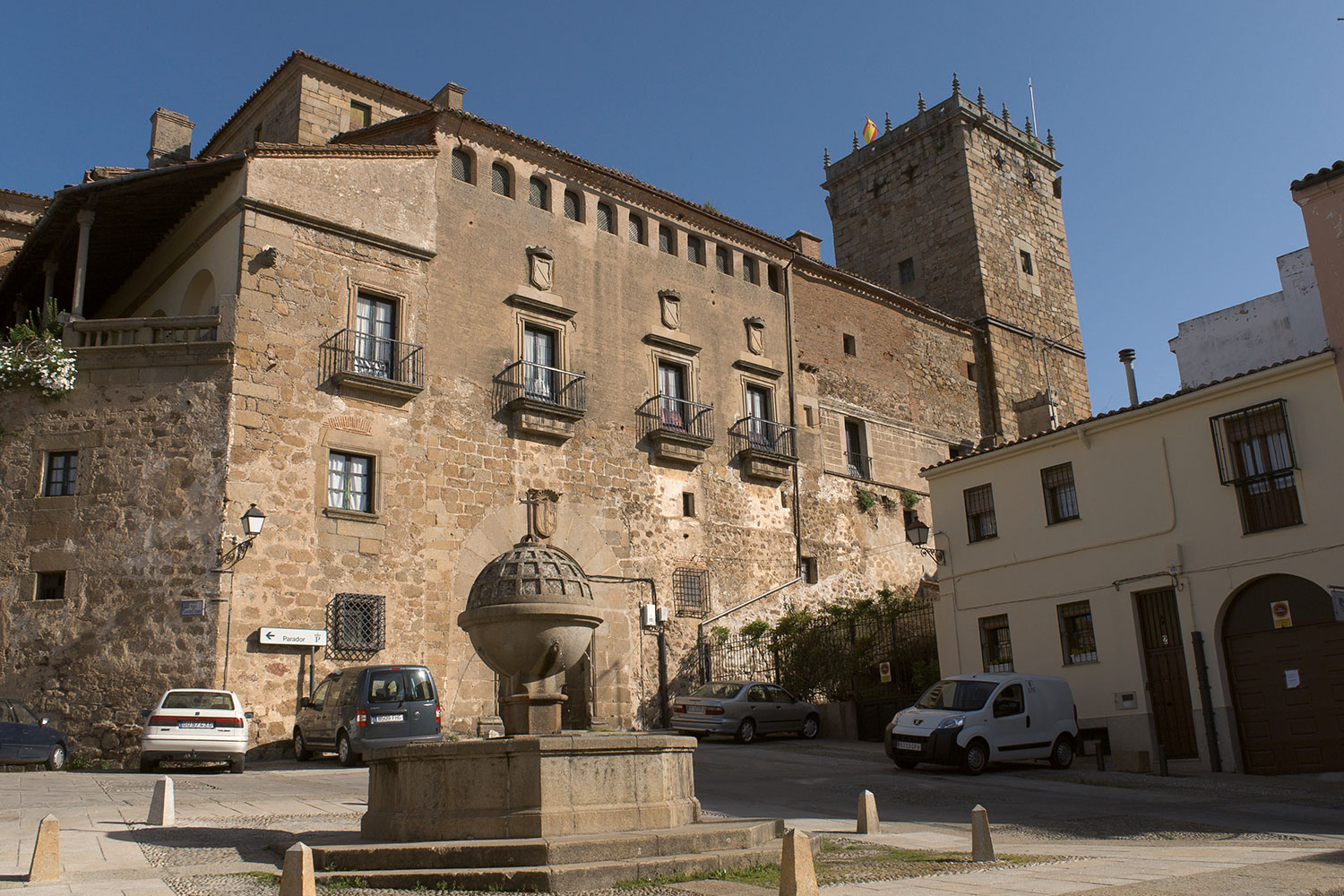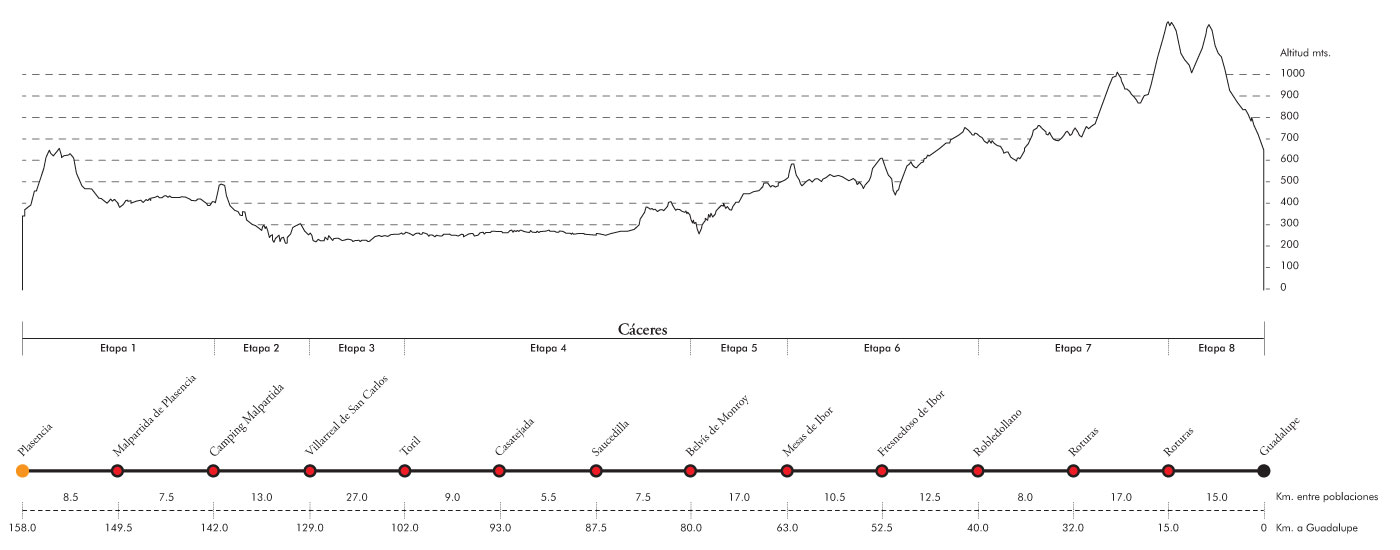


Our Way takes its name from one of the most representative natural areas in Spain and an emblem of conservation in Extremadura: Monfragüe National Park (from monte fragoso, “rugged mountain”). The natural values of our route are complemented by an extensive historical, artistic and cultural heritage, scattered across each of the thirteen municipalities we pass through. This history is reflected in its many monuments and remains: cave paintings in Monfragüe, castles and convents in Belvís de Monroy, historic palaces such as the Palacio de las Cabezas in Casatejada, churches such as San Blas in Toril (now a Biosphere Interpretation Centre) and historic-artistic ensembles of great importance such as the medieval city of Plasencia. It was founded by the Castilian king Alfonso VIII in 1186, after the reconquest of the territories occupied by the Muslims. Barely two years later, Pope Clement III created the bishopric of Plasencia, which in the 14th century came into conflict with the archbishop of Toledo, as both claimed that the church of Santa María de Guadalupe should lie within their diocese. The dispute was resolved in favour of Toledo, whose diocese took charge of the shrine.
By the 14th century, Guadalupe was already a centre of attraction for immigrants, pilgrims and merchants, who lived in the settlement that was gradually growing beside the shrine. Shortly after the death of the monastery’s great protector, Alfonso XI, Don Sancho, Bishop of Plasencia, took advantage of the situation to try to bring the recent religious foundation directly under his jurisdiction. He arrived in Guadalupe intending to seize Prior Toribio Fernández, imprison him and replace him with someone of his own choosing. Failing to find the prior, he broke open the church’s coffers and took 500 maravedís belonging to the church.
We also know that King Ferdinand ‘the Catholic’ set out from Plasencia on his last journey, before dying in Madrigalejo in 1516 on his way to Guadalupe to hold a chapter of the Order of Calatrava.
The twelve apostles of Belvís: one of the most representative and significant towns on our pilgrimage route, and in the Spanish evangelisation of the New World, is Belvís de Monroy. History tells that in 1523 twelve missionaries set out from the convent of San Francisco in Belvís for the newly conquered lands, and sowed devotion to the Virgin of Guadalupe in the new continent.